
ResearchResearch Interests: Chemical Biology, Bioorganic Synthesis, Quorum Sensing, Bacterial-Eukaryotic Communication, Molecular Basis of Pathogenesis |
|
Quorum SensingAn important focus of my group's research is the study of bacterial intra- and interspecies signaling molecules. Cell-to-cell communication is used by single-cell organisms to coordinate their behavior and function in such a way that they can adapt to changing environments and possibly compete with multicellular organisms. Chemical communication amongst bacteria has been termed “quorum sensing” (QS). Examples of QS-controlled behaviors are biofilm formation, virulence factor expression, antibiotic production and bioluminescence. These processes are beneficial to a bacterial population only when they are carried out in a coordinated fashion. Quorum sensing systems exist in both Gram-positive and -negative bacteria and a variety of oligopeptides and N-acyl-homoserine lactones have been identified as QS molecules. Many QS molecules have not been characterized fully, and we continuously aim to clarify the role of various QS molecules in bacterial signaling (in species such as Pseudomonas aeruginosa, Vibrio cholerae, Salmonella typhimurium, Helicobacter pylori) through synthesis and evaluation of QS molecules and potential antagonists and we develop methodologies to study a wide variety of newly discovered and undiscovered QS molecules. 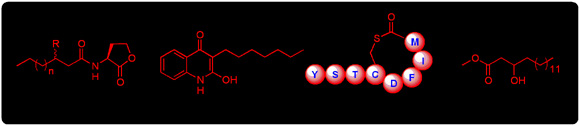
Examples of QS molecules employed by pathogens such as Pseudomonas aeruginosa and Staphylococcus aureus
Bacterial-Eukaryotic Interkingdom SignalingRecent reports have shown that several QS molecules can also have a direct effect on eukaryotes. The prime area of interactions between QS signals and higher organisms is presumed to be the innate immune system, whose main function is to detect the presence of invading micro-organisms and viruses. It is very likely that eukaryotes have developed mechanisms to sense the QS molecules that bacteria use to assess their cell density, since that would enable a rapid response that is correlated with the size of the bacterial population. We will investigate the interactions between QS molecules and potential receptors in eukaryotes that are expected to trigger an immune response. These investigations will further our understanding of the complex interactions that exist between bacteria and humans, and of certain mechanisms that the immune system uses to control both benign and pathogenic bacterial populations.
Group Members:
Me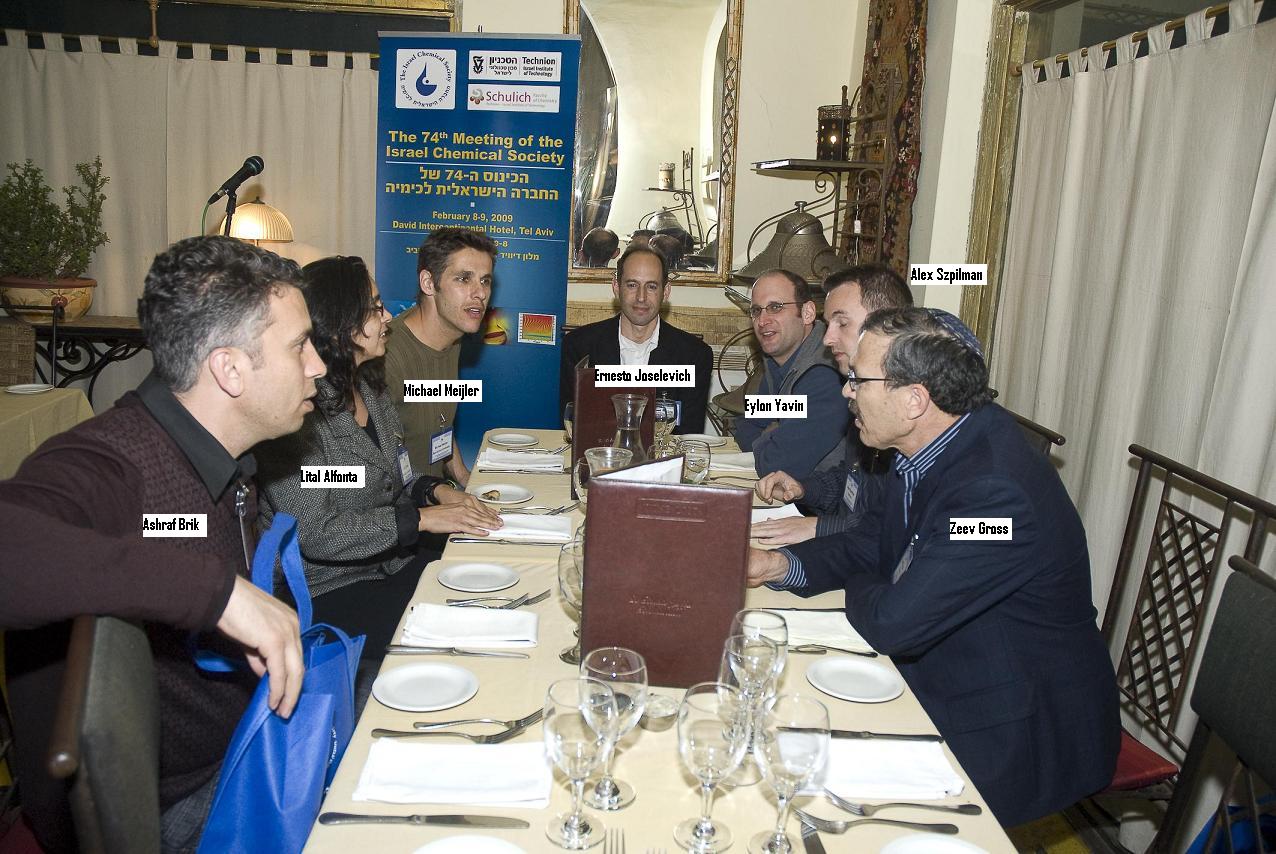
Dr. Meital Shema-Mizrahi (Staff Scientist)
Dr. Raju Adepu (Postdoctoral Fellow)
Rachel Gregor (Ph. D. student)
Niva Levi (Ph.D. student)
Yonatan Chemla (Ph.D. student, jointly with Prof. Lital Alfonta)
Alex Yashkin (Ph.D. student)
Shimrit David (Ph.D. student)
Dorin Kalson (Ph.D. student)
Danielle Mantin (Ph.D. student)
Lara Holoidovsky (M.Sc. student)
Hen Mozes (M.Sc. student)
Shaked Uzi (M.Sc. student)
And our newest labmember (contributed by Alex)
AlumniDr. Rambabu Dandela (Postdoctoral Fellow)
Dr. Pnina Krief (Researcher)
Dr. Antonia Delago (Postdoctoral Fellow)
> Aviad Mandaby (Ph.D. student)
Dr. Josep (Pep) Rayo (Postdoctoral Fellow)
Dr. Luba Dubinsky (completed Ph.D.)
Dr. Hadas Ganin (completed Ph.D.)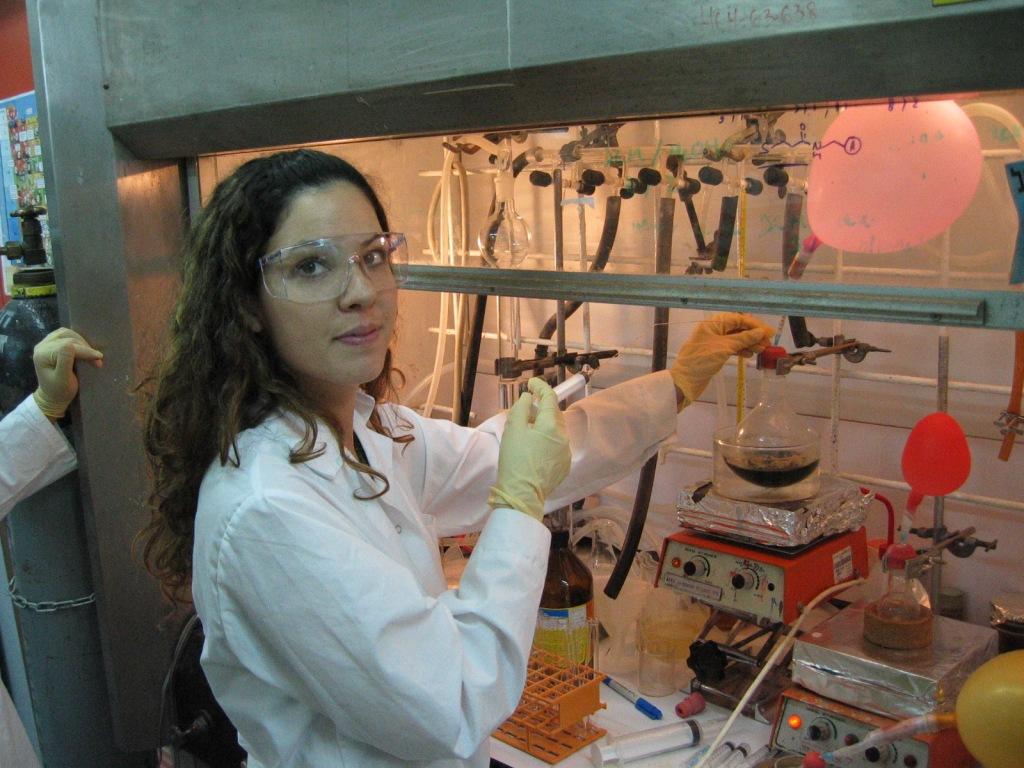
Dr. Neri Amara (completed Ph.D.)
Dr. Roi Mashiach (completed Ph.D.)
Sarit Yerushalmi (completed Ph.D., jointly with Prof. Gabriel Lemcoff)
Liron Amir (Ph.D. student, jointly with Prof. Lital Alfonta)
Nira Rabin (completed Ph.D.)
Hagai Reiss (completed M.Sc. studies)
Hagit Forckosh (completed M.Sc. studies)
Rony Schwartz (Ph.D. student)
| |